CANADA HISTORY
When the Seven Years' War broke out in 1756, France faced the daunting challenge of waging a global conflict across multiple continents. Given the vast scope of the war and the strain on its military resources, French leadership made a strategic decision to focus the majority of its military efforts in the European theater, where the stakes were highest and the balance of power between European nations was most directly in play. France, at the time, was deeply entrenched in a struggle for dominance with Britain and its allies, and much of its military strength was required to defend its interests and territory on the European mainland. This included fighting in key battles across central Europe, particularly against the forces of Prussia, Austria, and Britain.
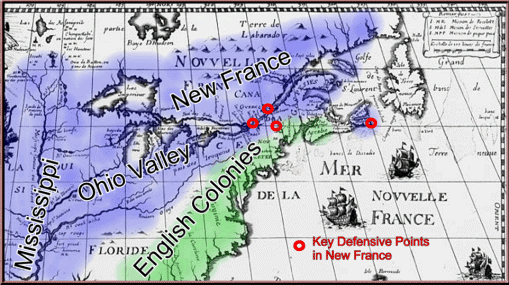
In contrast, France’s North American colony of New France was seen as secondary in importance to the broader conflict in Europe. With fewer resources to devote to defending its vast North American territories, French officials in Paris adopted a defensive strategy for the colony. This defensive approach was based on the belief that while Britain might focus on making territorial gains in North America, France could preserve its holdings by relying on natural geographic advantages, defensive fortifications, and Indigenous alliances to slow or halt British advances. The French government hoped that, even if military engagements in North America did not lead to outright victories, they could still maintain enough of a presence to secure favorable terms at the eventual peace negotiations.
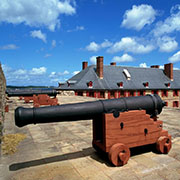
New France, which stretched from the St. Lawrence River down to the Mississippi, relied heavily on a series of forts and fortified settlements, such as Louisbourg, Quebec, and Fort Duquesne, to protect key locations and trade routes. These forts served as defensive bulwarks against British incursions, and the French hoped that their well-positioned strongholds, combined with the difficult terrain of the Canadian wilderness, would make it challenging for British forces to gain significant ground. Additionally, French commanders in New France, such as the Marquis de Montcalm, adopted a strategy of limited offensive actions combined with defensive operations. Rather than seeking to aggressively expand French territory, Montcalm and other French leaders aimed to hold onto what they already controlled, hoping to outlast the British.
France also counted on its strong alliances with various Indigenous nations, who had long been trading partners and military allies of New France. These Indigenous allies, including the Huron and Algonquin, played a vital role in the defense of the French colonies, providing valuable intelligence, engaging in guerrilla warfare, and helping to disrupt British supply lines. French officials understood that these alliances could serve as a force multiplier, compensating for the relatively small number of French troops available in the colonies.
France’s ultimate goal was not necessarily to win the war outright in North America but to maintain enough of a foothold to negotiate favorable terms when the conflict eventually drew to a close. French leadership believed that even if they lost ground during the war, they could still recover key territories through skillful diplomacy during peace negotiations. This approach had worked in previous conflicts; after the War of the Austrian Succession (1740-1748), France had been able to recover Louisbourg, a strategic fortress on Cape Breton Island, through the Treaty of Aix-la-Chapelle, despite having lost it to the British during the war.
The defensive strategy in New France, however, faced significant challenges. While French leaders in Europe focused on the larger continental struggle, Britain was determined to turn the tide of the war by securing a decisive victory in North America. Under the leadership of Prime Minister William Pitt, Britain began to devote substantial military resources to the North American theater, including sending thousands of troops and utilizing its naval superiority to blockade French supply lines. British forces, combined with colonial militias and their own Indigenous allies, launched a series of coordinated attacks on key French forts and settlements.
By 1759, this British strategy began to bear fruit. The fall of Quebec, following the pivotal Battle of the Plains of Abraham, was a crushing blow to French ambitions in North America. Although France had initially hoped to hold its ground until a peace treaty could be negotiated, the loss of Quebec and subsequent British victories left the French with little leverage in North America. When the Treaty of Paris was signed in 1763, France was forced to cede nearly all of its North American territories to Britain, including Canada and its holdings east of the Mississippi River.
In the end, France’s decision to prioritize the European theater while adopting a defensive strategy in North America proved to be a miscalculation. Although France’s military efforts in Europe were significant, the loss of New France had long-term consequences for the French Empire. Britain’s victory in the Seven Years’ War reshaped the map of North America, establishing British dominance over the continent and setting the stage for the eventual rise of Canada as a British colony. The defensive strategy that France had hoped would preserve its North American territories ultimately fell short in the face of Britain’s determined military and diplomatic efforts.
Cite Article : www.canadahistory.com/sections/documents