CANADA HISTORY
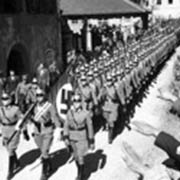
The events of the 1930s leading up to World War II were some of the most significant in the 20th century, not just for Europe but for nations like Canada that would eventually be drawn into the global conflict. The rise of Nazi Germany under Adolf Hitler presented a dramatic challenge to the fragile international order established after the First World War. As Hitler expanded German territory and influence, countries across the world, including Canada, faced tough decisions about how to respond to the growing threat of fascism and whether or not to commit to another war. In the Canadian context, Prime Minister William Lyon Mackenzie King played a key role in shaping the nation's foreign policy during these turbulent years, though his efforts were initially focused on avoiding conflict.
The Rise of Nazi Germany and the Canadian Perspective
Throughout the 1930s, Nazi Germany rapidly grew in both military power and political influence. Hitler's right-wing nationalist policies were seen by many in the capitalist world as a counterbalance to the communist threat posed by the Soviet Union, which had emerged as a rival global power following the Russian Revolution. For some, Hitler's promises to restore German national pride and reverse the effects of the Treaty of Versailles resonated not only within Germany but also among certain conservative and nationalist factions in other countries. However, for most democratic nations, including Canada, Nazi ideology represented a dangerous form of authoritarianism that threatened peace in Europe and beyond.
While many Canadians were apprehensive about the growing power of the Nazi regime, there were still those who sympathized with fascism, particularly as an alternative to communism. However, the Canadian government, led by Prime Minister Mackenzie King, remained cautious about engaging in any foreign military conflict. King's primary concern was to avoid the type of division and unrest that Canada had experienced during the First World War, especially with regard to conscription, which had sparked a national crisis in Quebec. King’s reluctance to commit to war aligned with the broader policy of appeasement adopted by Britain and France during the period.
Mackenzie King’s Diplomatic Approach
In 1937, King attended the Imperial Conference in London, where the policy of appeasement was debated among Britain’s allies. Appeasement, championed by British Prime Minister Neville Chamberlain, was based on the belief that Hitler’s territorial ambitions could be satisfied through negotiation, thus preventing a broader war in Europe. King supported this view, seeing it as a way to keep Canada out of another costly and divisive conflict.
During his time in Europe, King traveled to Germany to meet Hitler in person. This visit proved to be a pivotal moment in King’s thinking. He was reportedly charmed by Hitler and believed that the Nazi leader's intentions were not as aggressive as some feared. King left Germany convinced that Hitler merely sought to restore German territories lost after World War I and to unify ethnic Germans living in neighboring countries such as Austria and Czechoslovakia. King’s misjudgment of Hitler's true ambitions was not unique, as many European leaders also underestimated the extent of Nazi expansionism.
Following his meetings in Europe, King returned to Canada and expressed his support for the Munich Agreement, signed in September 1938 by Chamberlain and Hitler. The agreement allowed Germany to annex the Sudetenland, a region of Czechoslovakia with a significant ethnic German population. King, like many leaders at the time, believed that the Munich Agreement had averted another major war. In a message to Chamberlain, King wrote, “The heart of Canada is rejoicing tonight as the success which has crowned your unremitting efforts for peace.” Canada, he assured, was thankful for Chamberlain's role in keeping the peace.
The Illusion of Peace and the Road to War
Despite the optimism surrounding the Munich Agreement, it quickly became clear that Hitler had no intention of abiding by the terms of the accord. In March 1939, just six months after Munich, Hitler’s forces occupied the rest of Czechoslovakia, a direct violation of the agreement. This betrayal shattered any remaining hopes for peace through appeasement and marked a turning point in Europe’s relations with Germany.
For Canada, the annexation of Czechoslovakia raised serious questions about its role in any future conflict. The Statute of Westminster (1931) had granted Canada full control over its own foreign policy, meaning that Canada was no longer automatically obligated to join Britain in any declaration of war. However, Canada's close ties to Britain and the British Empire meant that any major conflict involving Britain would inevitably involve Canada as well.
In the months leading up to the outbreak of war, the Canadian government and public remained deeply divided over the issue of military intervention. King’s government, while still committed to avoiding another conscription crisis, recognized that Canada might soon be forced to contribute to a European conflict. Yet, King held out hope that diplomatic efforts could still succeed in preventing war.
The Canadian Volunteers in the Spanish Civil War
While the Canadian government was reluctant to engage directly in the European tensions of the 1930s, many individual Canadians were driven by a deep sense of moral duty to fight against fascism. During the Spanish Civil War (1936-1939), a group of Canadian volunteers, known as the Mackenzie-Papineau Brigade, joined the international forces fighting against General Francisco Franco's fascist regime. These volunteers saw the war in Spain as a proxy battle against the rising tide of fascism across Europe, particularly as Germany and Italy provided direct support to Franco’s forces.
The Mackenzie-Papineau Brigade, composed of approximately 1,500 Canadian volunteers, fought valiantly in Spain, despite being denied official support from the Canadian government. The Non-Intervention Pact, signed by several Western democracies, including Canada, meant that no official aid could be provided to the Republican forces fighting against Franco. This lack of support frustrated many Canadians, particularly those on the left who saw the Spanish Civil War as the first line of defense against the spread of fascism in Europe. The eventual defeat of the Republicans in 1939 only strengthened the resolve of many Canadians to stand up against fascism in the coming global conflict.
Canada’s Road to War
By the time Hitler invaded Poland on September 1, 1939, it was clear that diplomatic efforts had failed. The Munich Agreement, far from securing "peace in our time," had only emboldened Hitler to pursue further territorial expansion. Two days later, Britain and France declared war on Germany, and the world was plunged into World War II. For Canada, the decision to enter the war was not automatic, but it was inevitable. On September 10, 1939, following a week of deliberation, Canada declared war on Germany, marking the country's formal entry into the conflict.
The prelude to World War II was a critical period in Canadian history, one that tested the nation's political leadership and its ability to navigate complex international crises. Mackenzie King's efforts to avoid war, while well-intentioned, ultimately demonstrated the limitations of appeasement in the face of aggressive expansionism. Canada’s experience during this period also reinforced the importance of independent foreign policy decision-making, a lesson that would shape the country’s approach to international relations in the postwar era.
The events of the 1930s, including the rise of Nazi Germany, the Munich Agreement, and the outbreak of World War II, were pivotal moments in Canadian history. Canada, like much of the world, was initially hesitant to confront the growing fascist threat, preferring to rely on diplomatic solutions and avoid the horrors of another global conflict. Mackenzie King's misjudgment of Hitler’s intentions and his support for appeasement reflected the widespread desire to maintain peace, but also the naivety of believing that Hitler’s ambitions could be contained through negotiation.
Ultimately, Canada’s entry into World War II marked a turning point in the nation’s role on the international stage. The lessons learned from the failures of the 1930s, particularly the dangers of appeasement and the importance of standing up to aggression, would shape Canada’s postwar foreign policy and its commitment to collective security through organizations like the United Nations and NATO. The Mackenzie-Papineau Brigade and other individual efforts to fight against fascism also reflected Canada’s growing sense of responsibility on the global stage, a legacy that continues to influence Canadian values and identity today.
Cite Article : www.canadahistory.com/sections/documents