CANADA HISTORY
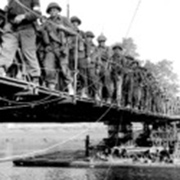
The Canadian Army's landing on Juno Beach on June 6, 1944, as part of the D-Day invasion, marked one of the most significant contributions of Canada to the liberation of Europe during World War II. However, what transpired after D-Day was equally crucial. The campaign that unfolded following the landings on Juno Beach, particularly in Normandy, Falaise, and the Low Countries, revealed the determination, sacrifice, and strategic importance of Canadian forces in the final stages of the war in Europe. The broader context of the campaign illustrated Canada’s evolving role in global affairs, its military prowess, and its position as a key partner in the Allied effort to defeat Nazi Germany.
The Landing on Juno Beach
The invasion of Normandy, or Operation Overlord, was the largest amphibious military assault in history. Canadian forces were assigned to Juno Beach, one of five beachheads designated for the invasion. Despite facing fierce German resistance, which included heavily fortified positions, mines, and obstacles, the Canadians made significant progress on D-Day, securing a bridgehead that allowed for the landing of additional troops and supplies.
The Canadian 3rd Infantry Division and the 2nd Armoured Brigade were tasked with advancing inland to secure key objectives, particularly the city of Caen, a strategic target in Normandy. The initial landings at Juno were marked by intense fighting, with over 1,000 Canadian casualties on the first day alone. Despite the heavy losses, the Canadians achieved most of their objectives, advancing further inland than any other Allied force on D-Day.
The Battle for Caen: A Grueling Campaign
While the landing at Juno Beach was successful, the struggle to take Caen would prove to be one of the toughest and most protracted battles in the Normandy campaign. Caen was crucial because it was a major road hub, and its capture would enable the Allies to secure supply routes for further advances. However, the Germans, recognizing its strategic importance, fiercely defended the city with some of their best Panzer divisions.
The Canadians, alongside British forces, were tasked with capturing Caen, but the German defense proved formidable. The fighting was brutal, characterized by vicious close-quarters combat, urban warfare, and relentless German counterattacks. The Canadians faced elite German units, including the 12th SS Panzer Division, composed mainly of fanatical Hitler Youth soldiers. Every advance was met with fierce resistance, making progress slow and costly.
The city of Caen was eventually liberated, but not until July 9, 1944, over a month after D-Day. The battle for Caen was emblematic of the Canadian soldiers' tenacity and resilience, as they fought through heavy bombardment and fortified German defenses. The capture of the city was a turning point in the Normandy campaign, but it came at the cost of thousands of Allied lives.
The Battle of Falaise: Closing the Gap
Following the liberation of Caen, the next critical objective for the Canadian forces was to close the Falaise Gap and encircle the retreating German forces in Normandy. By this point, Allied forces, including the Americans, had broken out of the Normandy beachhead and were pushing south and west. The Germans, recognizing the danger of being encircled, fought desperately to hold off the advancing Canadians and British forces while attempting to withdraw their troops.
The Battle of Falaise was one of the most crucial engagements of the Normandy campaign. The Canadians, advancing through dense hedgerow country that favored the defenders, faced relentless German counterattacks. The rough terrain made the fighting slow and grueling, with every inch of ground gained at a high cost. Tanks were used to support infantry, but the countryside's narrow lanes and thick hedgerows limited their effectiveness in a rapid breakthrough.
However, the Canadian forces, bolstered by air support and artillery, continued to push forward. The ultimate goal was to close the gap and trap the remaining German forces in a pocket near Falaise, preventing their escape. By August 21, 1944, the Falaise Pocket was finally sealed, trapping tens of thousands of German soldiers. The battle was a decisive victory for the Allies, as it effectively destroyed much of the German 7th Army and greatly weakened Germany’s ability to defend France. The capture of the Falaise Pocket opened the way for the liberation of Paris and the rest of France.
The Falaise Gap was significant for several reasons. First, it marked the end of organized German resistance in Normandy. Second, it highlighted the importance of Canadian forces in achieving one of the most critical operational successes of the Normandy campaign. The destruction of the German forces at Falaise accelerated the collapse of the Nazi occupation in France and paved the way for the Allied advance into the Low Countries and Germany itself.
The Liberation of France and the Low Countries
After the success at Falaise, the Canadian forces played a critical role in the swift liberation of France. As they advanced toward the Low Countries, the Canadians liberated numerous towns and cities, including Dieppe, the site of the disastrous 1942 raid in which over 900 Canadians had been killed. The liberation of Dieppe was particularly symbolic, as it marked the redemption of the earlier failure and demonstrated Canada’s military evolution.
By August 25, 1944, Paris was liberated, and the Germans were in full retreat. However, the war was far from over, and the Canadians, now part of the First Canadian Army, were tasked with advancing into the Netherlands and Belgium. These regions were critical for securing the Allies' supply lines and preventing the Germans from launching counteroffensives from their remaining positions in Western Europe.
The liberation of the Low Countries was one of the toughest campaigns for the Canadian forces. In the Netherlands, the terrain—characterized by rivers, canals, and flooded fields—made advances difficult. The Battle of the Scheldt, in particular, was a fierce and costly struggle, as the Canadians fought to clear the Scheldt estuary and open the port of Antwerp to Allied shipping. The fighting was intense, but by November 1944, the Canadians had successfully cleared the area, allowing vital supplies to flow into Europe and sustain the Allied advance.
Canadian Contributions and Their Significance
The Canadian role in the Normandy Campaign, and the subsequent liberation of France and the Low Countries, was critical to the overall success of the Allied war effort. The First Canadian Army, under the command of General Harry Crerar, was one of the most effective fighting forces in the European theatre. Canada's military contribution, which included over one million men and women in uniform by the war's end, was a testament to the nation's growing international significance.
On the home front, the success of the Canadian forces in Europe bolstered national pride and unity. The Canadian public, who had followed the news of the Normandy landings and the subsequent campaigns with great interest, began to see their country as a significant player on the world stage. The sacrifices made by Canadian soldiers at places like Juno Beach, Caen, Falaise, and the Scheldt helped solidify Canada’s identity as an independent, middle power capable of significant contributions to global peace and security.
The Normandy Campaign also marked a turning point in Canada's relationship with its Allied partners, particularly the United States and Great Britain. Canada's role in the planning and execution of the D-Day invasion and the subsequent campaigns demonstrated its military competence and reinforced its close ties with the British Empire and its emerging partnership with the United States. These relationships would become the foundation of Canada's postwar foreign policy, particularly in the context of the United Nations and the creation of NATO.
The Canadian landings on Juno Beach on June 6, 1944, and the subsequent campaign in Normandy, Falaise, and the Low Countries were defining moments in both Canadian military history and the broader history of World War II. The contributions of Canadian soldiers, sailors, and airmen to the liberation of France and the defeat of Nazi Germany were instrumental in the ultimate success of the Allied war effort. These events underscored Canada's growing international role, both as a military power and as a nation committed to the defense of freedom and democracy. The bravery and sacrifice of the Canadian forces during this period helped shape the postwar world and solidified Canada’s reputation as a key partner in the Allied victory.
Cite Article : www.canadahistory.com/sections/documents