CANADA HISTORY
By the spring of 1944, the tides of World War II had shifted decisively in favor of the Allies. On multiple fronts, Nazi Germany was retreating, and the promise of a second front in Western Europe, long demanded by the Soviet Union and anxiously awaited by the Western Allies, was finally on the horizon. The long and bitter sacrifices of earlier battles, like the Dieppe Raid of 1942, weighed heavily on the minds of Canadians, who hoped that the lessons learned from those bloody confrontations would serve them well in what was to come. As 1944 progressed, Canada, alongside its Allies, stood poised to contribute decisively to the liberation of Nazi-occupied France.
The Road to D-Day: Canada’s Role in Planning the Invasion
The D-Day invasion, codenamed Operation Overlord, was the result of meticulous planning by the Allied forces. Since the early days of the war, Canadian forces had been stationed in Britain, preparing for a momentous confrontation with the Germans on the European continent. The failure at Dieppe had provided invaluable lessons for amphibious assaults: the importance of surprise, better air support, and the need for more effective coordination between infantry, naval, and air forces.
By 1944, England had become a massive staging ground for millions of Allied troops from the United States, Britain, Canada, and other nations, transforming into a “floating arsenal” ready for the final push into Europe. As the Allied planners prepared for the largest amphibious assault in history, Canada was given a crucial role in the overall strategy. Canadian forces, comprising a significant portion of the British Second Army, were assigned one of the five key landing beaches—Juno Beach—in the Normandy region.
June 6th, 1944: The Invasion Begins
In the early hours of June 6th, 1944, after months of careful planning and anticipation, the word finally came: the long-awaited invasion of Nazi-occupied France had begun. The Germans were well aware that an invasion was coming and had spent years building up the Atlantic Wall, a formidable system of coastal defenses stretching from Norway to Spain. Yet despite their preparation, the exact location and timing of the assault remained a mystery to them until the very last moment.
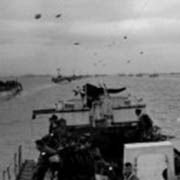
As dawn broke, thousands of Allied troops stormed the beaches of Normandy, with Canadian forces landing on Juno Beach. The Canadian soldiers were part of a meticulously coordinated assault that involved a combination of naval bombardments, air raids, and airborne paratroopers landing behind enemy lines to secure key positions. The conditions were perilous, with heavily fortified German defenses awaiting them. Mines, barbed wire, and machine-gun nests lined the beaches, making the initial landings dangerous and costly.
The Canadian Assault on Juno Beach
Canada's 3rd Infantry Division and 2nd Armoured Brigade were tasked with securing Juno Beach, a 10-kilometer stretch of coastline between Gold Beach to the west and Sword Beach to the east. The resistance at Juno was fierce. The beach was heavily defended by elements of the German 716th Infantry Division, equipped with anti-tank guns, machine guns, and artillery positions. As Canadian troops disembarked from their landing craft, they faced intense fire. Casualties were heavy during the first wave of landings, with many soldiers cut down before they could even reach the shore.
However, despite these initial losses, the Canadians fought back with tenacity. The North Shore Regiment, The Queen's Own Rifles of Canada, and other units pressed inland, supported by Sherman tanks and close air support. The Canadians managed to break through the German defenses more quickly than expected, achieving the deepest penetration of all the Allied forces by the end of D-Day.
One of the defining features of the Canadian success on Juno Beach was the strategic use of combined arms tactics. Infantry units worked closely with tanks, clearing German strongpoints and pushing beyond the beachhead into the surrounding villages and countryside. By the end of the first day, Canadian forces had pushed inland as far as 10 kilometers, securing key objectives and linking up with British forces to the east.
A Turning Point: Confidence in Victory
The successful landings at Normandy, including the Canadian triumph at Juno Beach, marked a critical turning point in the war. For Canada, the victory at Juno was a matter of national pride and a testament to the contributions the country had made to the Allied war effort. The sacrifices at Dieppe two years earlier had not been in vain. The lessons learned from that bloody raid had been applied on D-Day, ensuring that the Canadians would not face the same disastrous outcome.
The foothold established on the beaches of Normandy gave the Allies a critical base from which to launch further operations into occupied France. As British Prime Minister Winston Churchill famously remarked, D-Day was “the beginning of the end” for Nazi Germany. The Canadian successes on D-Day filled the nation with a renewed sense of confidence and resolve. After years of preparation, frustration, and waiting, the Canadians were finally engaged in the decisive phase of the war in Europe.
The Struggle for Normandy: Beyond D-Day
The fight for Normandy was far from over after the initial landings. While the Canadians had made impressive gains on D-Day, the following weeks would see some of the most intense and grueling battles of the entire war. Canadian forces were tasked with capturing the strategic city of Caen, a key objective that proved far more difficult than anticipated due to stiff German resistance.
The Germans, under Field Marshal Erwin Rommel, threw their best units into the defense of Normandy, including elite Panzer divisions. The fighting became a bloody, attritional struggle, with Canadian forces facing counterattacks from some of the Wehrmacht's best troops. The campaign to secure Normandy was not a quick blitzkrieg but rather a slow, grinding advance, marked by heavy casualties and the destruction of entire towns and villages.
Canadian forces, despite these challenges, continued to play a pivotal role in the Normandy campaign. After the eventual capture of Caen, Canadian units participated in the closing of the Falaise Pocket, a critical battle that trapped and destroyed much of the German Seventh Army. This victory opened the way for the liberation of France and the eventual Allied advance into the Low Countries and Germany.
Canadian Sacrifice and Legacy
The Normandy campaign, and particularly the landings at Juno Beach, solidified Canada's place in the pantheon of nations that had made a decisive contribution to the defeat of Nazi Germany. The Canadian military had grown from a small, untested force at the start of the war into one of the most formidable divisions in the Allied armies. The cost of this transformation was high—over 1,000 Canadian soldiers were killed, wounded, or captured on D-Day alone, with many more casualties in the weeks and months that followed.
For the Canadian home front, the news of the landings brought a mixture of relief, pride, and grief. Families across the country anxiously awaited word from their loved ones fighting in Europe. The sacrifices made by Canadian soldiers on the beaches of Normandy and in the fields of France were remembered and honored, becoming a central part of Canada’s World War II legacy.

Canada’s Crucial Role in the D-Day Invasion
The Canadian assault on Juno Beach during the D-Day landings of June 6th, 1944, was one of the defining moments in the nation's military history. Canada’s role in Operation Overlord was a testament to the nation’s ability to contribute to a complex and decisive military operation on the global stage. Canadian forces fought with distinction and skill, overcoming fierce German resistance and achieving the deepest penetration of all the Allied beachheads by the end of D-Day.
The success of the landings at Juno Beach and the subsequent liberation of Normandy marked the beginning of the end for Nazi Germany. For Canada, the D-Day landings were a source of immense national pride, demonstrating the country’s commitment to the Allied cause and its capability to stand shoulder to shoulder with larger powers like Britain and the United States. The battle for Normandy, including the Canadian triumph at Juno Beach, remains a symbol of Canadian bravery, sacrifice, and contribution to the victory in World War II.
Cite Article : www.canadahistory.com/sections/documents