CANADA HISTORY
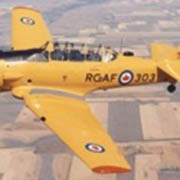
As war loomed on the horizon in 1939, Canada found itself once again inextricably linked to European conflict, particularly to its closest ally, Britain. With the invasion of Poland by Nazi Germany and the start of World War II on September 1st, 1939, Canadian leaders faced difficult decisions about how the nation would contribute to the war effort. Despite a desire to avoid the catastrophic human costs of the First World War, Canada quickly understood that it could not remain on the sidelines. The changing nature of warfare—specifically the rise of air power as a decisive tool of modern combat—pushed Canada toward a new and significant role. That role materialized in the form of the British Commonwealth Air Training Plan (BCATP), an ambitious and transformative program that would forever alter Canada's wartime contribution and shape its post-war identity.
The Strategic Importance of Air Power
The rapid fall of Poland to Germany's Blitzkrieg tactics revealed a new kind of warfare—one in which air superiority played a critical role. The speed and efficiency with which German forces overran Europe’s defenses in 1939 and 1940 left the Allied powers scrambling to bolster their air capabilities. Britain, which would soon stand as the last major power opposing Germany in Europe, recognized that winning the air war was essential for its survival. However, Britain lacked the capacity to train a sufficient number of pilots and aircrews on its own soil, especially with the threat of German air raids ever-present. It was in this context that Canada emerged as a critical partner in a massive Allied effort to train the next generation of pilots.
The Formation of the British Commonwealth Air Training Plan
The concept of a vast air training program took shape quickly. On December 17, 1939, an agreement was reached between Britain, Canada, Australia, and New Zealand to establish the British Commonwealth Air Training Plan (BCATP), a central initiative that would produce tens of thousands of pilots and aircrews for the Allied war effort. Canada was ideally suited for this program for several reasons. Its vast open spaces provided ample room for the construction of airfields and training facilities, far from the reach of German bombers. Canada was also geographically close to the United States, a nation whose industrial strength would later prove invaluable in supplying planes and parts to the Allies.
Prime Minister William Lyon Mackenzie King saw the BCATP as a way for Canada to make a significant contribution to the war effort while managing domestic political pressures. King was especially concerned about avoiding conscription, a divisive issue that had torn the country apart during the First World War. By focusing on training pilots rather than sending large numbers of soldiers to fight in Europe, King hoped to appease both English and French Canadians and maintain political unity.
The Challenges and Logistics of the BCATP
The scale of the BCATP was unprecedented. It involved the construction of hundreds of airfields, hangars, and training schools, and required thousands of personnel to operate and manage the facilities. The program officially began on April 29, 1940, and faced significant initial challenges. At the time, Canada lacked the necessary airfields, instructors, and aircraft. The rapid expansion of the BCATP was a herculean task, but the Canadian government, military, and private industry rose to the challenge. Within months, new airfields dotted the landscape, and the necessary infrastructure began to take shape.
A key feature of the BCATP was that it was managed primarily by the Royal Canadian Air Force (RCAF), but it relied heavily on support from civilian flying clubs and the private sector. Canada quickly scaled up its capacity to meet the needs of the program. Over the course of the war, the BCATP grew to include 231 sites, which comprised 107 schools and 184 ancillary units. The scope of the effort was massive: by the end of the war, the BCATP had trained nearly 132,000 pilots and aircrew, not only from Canada but from Britain, Australia, New Zealand, the United States, and other Allied nations, including those from occupied Europe.
The Economic and Social Impact on Canada
The British Commonwealth Air Training Plan had a profound economic and social impact on Canada. The program cost $1.6 billion, a vast sum in wartime, but the return on investment was significant. The construction of airfields and training schools provided a much-needed boost to local economies, particularly in rural areas. Thousands of Canadians found employment building and maintaining the infrastructure needed to support the program, including airfields, hangars, and barracks. Additionally, the demand for aircraft, engines, and spare parts fueled industrial growth, particularly in Ontario and Quebec, where factories pivoted from peacetime production to manufacturing war materiel.
Moreover, the BCATP contributed to Canada's transformation from an agrarian economy to a modern industrial power. The skills learned by Canadian workers during the war—especially in aviation, engineering, and manufacturing—helped lay the foundation for post-war prosperity. The development of Canada’s aviation industry, which continued to grow in the decades after the war, can be traced directly to the training and manufacturing programs of the BCATP.
Canada's Identity on the Global Stage
The BCATP was not just a military or economic success; it also played a critical role in shaping Canada’s identity on the global stage. By taking on a leading role in training pilots and aircrews, Canada established itself as a vital player in the Allied war effort. Canadian airfields became the training grounds for pilots who would go on to fight in critical battles over Europe, North Africa, and the Pacific. The importance of air power in modern warfare, and Canada's ability to provide a steady stream of well-trained pilots, meant that Canada was indispensable to the Allied victory.
While Britain initially hoped that Canadian pilots would be folded into British Royal Air Force (RAF) units, Prime Minister King pushed for the establishment of distinct Canadian squadrons within the RCAF. Although this was not always practical—due to the logistical complexities of managing such a massive training program—many Canadian airmen fought under the Canadian banner, wearing RCAF uniforms with Canadian insignia on their shoulders. The sight of Canadian pilots flying Spitfires, Hurricanes, and Lancaster bombers into battle became a point of national pride.
Strategic Outcomes and Legacy of the BCATP
The British Commonwealth Air Training Plan played a pivotal role in enabling the Allies to achieve air superiority over Nazi Germany’s Luftwaffe. As the tide of war turned in favor of the Allies in 1942 and 1943, control of the skies over Europe became increasingly important. Canadian-trained pilots participated in key missions, including the Battle of Britain, the bombing raids on German industrial targets, and the Normandy invasion. The airmen trained in Canada were integral to the strategic bombing campaigns that crippled Germany’s industrial capacity and disrupted its war effort.
The success of the BCATP also strengthened Canada’s post-war military and aviation industries. Many of the airfields constructed during the war continued to serve as bases for the RCAF and for civilian aviation after 1945. Moreover, the training techniques and technologies developed during the BCATP were applied to post-war military aviation, helping Canada maintain a modern and capable air force.
Conclusion: A Defining Contribution to the War Effort
The British Commonwealth Air Training Plan stands as one of Canada's most significant contributions to the Second World War. Not only did it play a decisive role in ensuring Allied air superiority, but it also reshaped Canada’s economy, military, and international identity. The program’s success in training pilots and aircrews laid the groundwork for the defeat of Nazi Germany and the eventual Allied victory. Furthermore, the economic and social transformations sparked by the BCATP helped propel Canada into the post-war world as an industrialized nation with a growing sense of independence and national pride.
The BCATP is often remembered as Canada’s “Aerodrome of Democracy,” a title that underscores the critical role Canada played in the global fight for freedom and democracy during the Second World War. The program left an enduring legacy, both in Canada and in the wider world, marking a period of remarkable cooperation between Commonwealth nations and a time when Canada took on a leading role in the most critical conflict of the 20th century.
Cite Article : www.canadahistory.com/sections/documents