CANADA HISTORY - War-WWI
The Battle of St. Eloi Craters, fought from March 27 to April 16, 1916, was a bitter and chaotic engagement for the Canadian Corps during the First World War. This battle, which took place in the Ypres Salient near the village of St. Eloi in Belgium, was a stark example of the challenges posed by trench warfare in the early years of the conflict. For Canada, it was a trial by fire that exposed the difficulties of operating in a shattered landscape, complicated by confusion, poor communication, and muddy, crater-filled terrain. The battle's outcome, while not strategically decisive, left a lasting impact on the Canadian forces, providing hard-learned lessons that would influence future operations on the Western Front.
To understand the significance of the Battle of St. Eloi Craters, it is important to place it within the broader context of the war in early 1916. The Western Front had become locked in a stalemate by this point, with both the Allied and Central Powers entrenched in defensive positions that stretched from the North Sea to the Swiss border. The Ypres Salient, in particular, had been the scene of some of the war’s most intense fighting, as the Allies and the Germans vied for control of the small, strategically important salient that jutted into German-held territory. Ypres itself had been largely reduced to ruins by relentless artillery bombardments, and the surrounding countryside had been transformed into a desolate wasteland of mud, craters, and tangled barbed wire.
St. Eloi, located just south of Ypres, was part of this devastated landscape. The area was pockmarked with craters, the result of previous battles and mining operations by both sides. The mining war, in which tunnels were dug under enemy positions and packed with explosives, had become a common feature of trench warfare by 1916. The goal of these underground detonations was to destroy enemy fortifications and create opportunities for infantry to advance. The British forces had been engaged in such mining operations in the St. Eloi sector for some time, hoping to undermine the German defenses in preparation for a larger offensive.
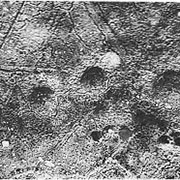
The battle itself began on March 27, 1916, when the British Army detonated six massive mines beneath the German positions around St. Eloi. The explosions created enormous craters, the largest of which was 40 feet deep and 200 feet wide, reshaping the already ruined landscape. The objective of the British and Canadian forces was to seize these craters and establish a forward position that would give them a tactical advantage over the Germans in the area. The craters, though filled with water and mud, represented valuable high ground in the flat, featureless terrain of Flanders, and whoever controlled them would have the upper hand in artillery observation and defensive operations.
At first, the British attack seemed to go according to plan. The explosions had devastated the German front lines, and British infantry advanced to occupy the craters in the aftermath of the blasts. However, the situation quickly deteriorated. The craters, filled with mud and debris, proved difficult to defend, and communication between the front lines and headquarters was poor. The shell-shocked landscape made it nearly impossible to maintain coherent lines, and the British positions soon became disorganized as the soldiers struggled to hold the craters against German counterattacks.
It was in this chaotic environment that the Canadian Corps entered the battle. The Canadian 2nd Division, under the command of Major-General Richard Turner, was tasked with relieving the exhausted British troops and consolidating control of the craters. The Canadians had only recently arrived on the Western Front, and the Battle of St. Eloi was one of their first major engagements. For many of the Canadian soldiers, this would be their introduction to the grim realities of trench warfare in Flanders.
The Canadians were thrown into a situation that was already fraught with confusion. The craters, which had initially been captured by the British, were now contested by German forces, who had launched a series of fierce counterattacks to retake the lost ground. The battlefield was a morass of mud, shell craters, and flooded trenches, making movement and communication extremely difficult. The front lines were ill-defined, and many Canadian units were unsure of their exact positions or the location of the enemy. This confusion was exacerbated by the fact that the maps being used by the Canadians were outdated and inaccurate, leaving commanders with little reliable information about the situation on the ground.
Despite these challenges, the Canadians fought bravely to hold the craters. They faced relentless German shellfire and machine-gun attacks, and the waterlogged craters offered little in the way of protection. The Germans, determined to retake the high ground, launched a series of well-coordinated counterattacks, and the fighting quickly descended into a brutal, close-quarters struggle. The Canadians, though inexperienced, displayed remarkable tenacity, clinging to their positions despite the appalling conditions.
However, the battle soon took a heavy toll on the Canadian forces. The lack of proper communication between the front lines and the rear made it difficult for Canadian commanders to coordinate reinforcements or resupply their troops. The muddy terrain made it almost impossible to move artillery into position to support the infantry, and the constant German shelling turned the craters into death traps. As the battle dragged on, the Canadians were gradually pushed back from the craters they had been tasked with defending.
By mid-April, it had become clear that the Canadian efforts to hold the St. Eloi Craters were unsustainable. The Germans had managed to retake most of the craters, and the Canadians had suffered heavy casualties in the process. The battle had devolved into a stalemate, with neither side able to make significant gains. On April 16, the Canadians were finally relieved by British forces, bringing an end to the Battle of St. Eloi Craters.
The battle was a costly and frustrating experience for the Canadian Corps. Over 1,300 Canadian soldiers were killed, wounded, or went missing during the engagement, and the overall result was inconclusive. The Germans had managed to recapture most of the craters, and the strategic situation in the Ypres Salient remained largely unchanged. However, the Battle of St. Eloi Craters provided the Canadians with valuable, if painful, lessons about the nature of modern warfare.
One of the key takeaways from the battle was the importance of communication and coordination in trench warfare. The confusion that plagued the Canadian efforts at St. Eloi was largely due to poor communication between the front lines and headquarters, as well as the inaccurate maps that left commanders unsure of the exact positions of their troops. In future battles, the Canadians would place a greater emphasis on improving communication and ensuring that front-line commanders had access to up-to-date information.
The battle also underscored the challenges posed by the difficult terrain of Flanders. The mud, waterlogged craters, and shattered landscape made it nearly impossible for infantry to move quickly or for artillery to be brought forward in support. In later operations, the Canadians would develop more sophisticated tactics for dealing with such terrain, including the use of creeping barrages and better coordination between artillery and infantry.
While the Battle of St. Eloi Craters was not a decisive engagement, it was an important moment in the development of the Canadian Corps. The Canadians had faced a difficult and disorganized situation, yet they had fought with determination and courage. The battle exposed weaknesses in their command and control systems, but it also highlighted the resilience of the Canadian soldiers. These lessons would be applied in future battles, as the Canadian Corps evolved into one of the most effective fighting forces on the Western Front.
In the broader context of the war, the Battle of St. Eloi Craters was part of the ongoing struggle for control of the Ypres Salient, an area that would see continued fighting throughout the war. The battle did not significantly alter the strategic situation in Flanders, but it was a reminder of the brutal realities of trench warfare, where even the smallest gains came at a tremendous cost in human lives. For the Canadians, the battle was a baptism of fire, marking their entry into the grinding attrition that characterized much of the war on the Western Front.
The fallout from the battle was felt not only on the battlefield but also in the Canadian command structure. The confusion and difficulties faced by the Canadian troops during the battle led to criticism of Major-General Turner’s leadership, and questions were raised about the readiness of the Canadian forces for such operations. However, the lessons learned at St. Eloi would help shape the future of the Canadian Corps, which would go on to achieve great successes in later battles such as Vimy Ridge and Passchendaele.
In the end, the Battle of St. Eloi Craters was not a battle of sweeping movements or dramatic breakthroughs. It was a grim, muddy, and confused struggle over a series of water-filled craters that symbolized the brutal nature of trench warfare. For the Canadians, it was a hard-fought and costly engagement, but one that provided valuable experience and lessons that would prove essential in the later stages of the war. The men who fought at St. Eloi did so in conditions that tested their endurance and resolve, and their sacrifices contributed to the eventual victories that would come in the years that followedThe village of St Eloi is principally remembered today for its wartime history of underground mine warfare. Within the small confines of the area some 30 mines were detonated by both British and German forces.
The British exploded six of these at one time (27 March 1916) with the largest - of 95,600 lbs - being exploded by 1st Canadian Tunnelling Company along with 18 other mines to mark the start of the Battle of Messines on 7 June 1917. This particular mine resulted in the capture of St Eloi by the British 41st Division.
Two of the largest St Eloi craters - both detonated on 27 March 1916 - remain today and straddle the old German lines of 1916-17. Both of these are on private land and are used for fishing or swimming. A third, smaller, mine also lies nearby.
| Battle: | April 3 - 16th, 1916 |
|||
| Campaign: | Western Front | |||
| War: | World War I | 1914 - 1918 | ||
| Where: | Village St Eloi | |||
| Western Front | ||||
| France | ||||
Opponents |
||||
| Belligerents: | Canada | Germany | ||
| Britain | ||||
| Commanders: |
|
|||
| Forces: | Men | 00 Men | ||
| Result: | Stalemate |
|||
| Casualties: | Canada & Allies | Opponents | ||
| Casulaties-1,373 | Casulaties-? | |||
Cite Article : Reference: www.canadahistory.com/sections/documents/documents.html
Source: NA