CANADA HISTORY
The early 1960s in Quebec were a period of profound transformation, marked by significant social, cultural, and political changes. These developments were set against the backdrop of North America's evolving cultural landscape, where revolutionary ideologies and calls for political action resonated with youth and intellectuals alike. Quebec was no exception, as the Liberal government, led by Premier Jean Lesage, initiated sweeping reforms during the Quiet Revolution, a period that sought to modernize the province, reduce the influence of the Catholic Church, and assert Quebec's identity within Canada. While this movement inspired hope for many, there were others who felt that the pace of change was too slow, and that only radical, even violent, measures could achieve true liberation.
It was in this charged environment that the Front de libération du Québec (FLQ), or Front for the Liberation of Quebec, emerged. The FLQ was a militant separatist group that believed Quebec's independence could only be achieved through violent revolution. Inspired by global figures like Che Guevara, Chairman Mao, and the writings of Frantz Fanon, the FLQ saw violence not as an evil, but as a necessary tool for political change. This belief was reinforced by the revolutionary fervor sweeping the world, as movements from Latin America to Africa used violence in their struggles for independence.
The Birth of the FLQ
The FLQ's formation was influenced by a variety of factors, including dissatisfaction with the federal government, frustration with the slow pace of reform, and a growing sense of Quebecois nationalism. Among the most influential figures in the group's formation was Georges Schoeters, a Belgian revolutionary who had been involved in leftist movements in Europe. Schoeters, along with other radical thinkers, helped shape the FLQ’s ideology, which blended Marxism, anti-colonialism, and Quebec nationalism. The group saw itself as the vanguard of a revolutionary movement that would free Quebec from what they viewed as the oppressive grip of Anglo-Canadian domination.
The FLQ operated in secretive cells, a tactic borrowed from guerrilla movements around the world. This cell structure ensured that no single member knew the full extent of the organization, making it harder for law enforcement to dismantle the entire network. Each cell operated independently, but all adhered to the FLQ’s broader mission of using violence to achieve Quebec’s independence. Notable cells included the Viger Cell, the Dieppe Cell, the Nelson Cell, and later, the two most infamous groups: the Liberation Cell and the Chenier Cell. These latter two would be responsible for triggering the October Crisis of 1970, one of the darkest moments in Canadian history.
The Escalation of Violence
The FLQ began its campaign of violence in 1963, carrying out bombings, armed robberies, and other acts of terrorism. On March 7, 1963, the group bombed a railroad line that Prime Minister John Diefenbaker was scheduled to travel on, an act that signaled their willingness to directly target government officials. Over the next few years, the FLQ’s attacks became more frequent and more deadly. Their targets included government buildings, military installations, and symbols of federal authority in Quebec.
In 1966, the FLQ published a manifesto titled "Revolutionary Strategy and the Role of the Avant Garde," which laid out their vision for an armed revolution. The manifesto called for violent action against the state, arguing that only through bloodshed could Quebec achieve its independence. While the FLQ initially enjoyed some public sympathy—particularly from young Quebec nationalists who were frustrated with the slow pace of change—their increasingly violent tactics began to alienate the broader population.
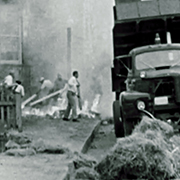
One of the FLQ’s most high-profile attacks occurred in 1969, when they bombed the Montreal Stock Exchange, injuring 27 people. Later that year, they bombed the home of Jean Drapeau, the mayor of Montreal. These attacks marked a turning point for the FLQ, as public support for their cause began to wane in the face of their growing brutality. Nonetheless, the group continued to escalate its actions, culminating in the events of the October Crisis.
The October Crisis
The October Crisis of 1970 was the most dramatic and violent episode in the FLQ’s history. The Liberation Cell and the Chenier Cell of the FLQ kidnapped two high-profile figures: James Cross, a British trade commissioner, and Pierre Laporte, Quebec’s Minister of Labour. These kidnappings were intended to force the Canadian government to release FLQ members who had been imprisoned for previous acts of terrorism, as well as to draw attention to their demands for Quebec independence.
The FLQ issued a manifesto during the crisis, calling for the overthrow of what they viewed as the "colonial" Canadian state and the establishment of an independent Quebec. The kidnappings and subsequent murder of Pierre Laporte shocked the nation and pushed the Canadian government to take unprecedented action. Prime Minister Pierre Trudeau, facing the possibility of widespread violence, invoked the War Measures Act on October 16, 1970, granting the government extraordinary powers to combat the FLQ.
The War Measures Act allowed for the suspension of civil liberties, the deployment of soldiers in Quebec, and the arrest of hundreds of suspected FLQ sympathizers without charge. This marked the first and only time the War Measures Act was invoked in peacetime, and it remains one of the most controversial decisions in Canadian history. While many Canadians supported the government’s actions, believing them necessary to maintain order, others saw the use of the War Measures Act as an overreach of state power.
The crisis came to a bloody end with the discovery of Pierre Laporte’s body on October 17, murdered by the FLQ’s Chenier Cell. James Cross was eventually released alive after negotiations, but the damage to the FLQ’s cause was irreversible. The murder of Laporte turned public opinion decisively against the FLQ, and the group’s support base eroded rapidly.
The Decline of the FLQ and Its Legacy
The October Crisis marked the beginning of the end for the FLQ. The invocation of the War Measures Act, combined with increased law enforcement efforts, led to the arrest of many FLQ members, and those who were not captured either fled the country or went underground. The FLQ’s violent campaign had failed to achieve its goal of Quebec independence, and by the early 1970s, the group had all but disbanded.
Despite its failure, the FLQ left a lasting impact on Quebec and Canadian politics. The group’s violent tactics brought the issue of Quebec sovereignty to the forefront of national debate, forcing both the provincial and federal governments to confront the question of Quebec’s place within Canada. In the wake of the October Crisis, support for peaceful, democratic approaches to Quebec sovereignty grew, most notably through the rise of the Parti Québécois (PQ).
The Parti Québécois, led by René Lévesque, offered a non-violent alternative to the FLQ’s terrorism. In 1976, the PQ won the provincial election in Quebec, marking a significant shift in the province’s political landscape. The PQ’s rise to power was a direct consequence of the FLQ’s failure; while many Quebecers rejected the FLQ’s violent methods, they still supported the broader goal of achieving greater autonomy for the province.
The FLQ’s legacy is complex. On the one hand, the group is remembered for its violent tactics and the bloodshed of the October Crisis. On the other hand, the FLQ helped to ignite a broader conversation about Quebec’s future within Canada, a conversation that continues to shape the country’s political landscape to this day. While the FLQ’s dream of an independent Quebec through violence was never realized, their actions helped to pave the way for peaceful, democratic efforts toward Quebec sovereignty.
The rise and fall of the FLQ is a critical chapter in Quebec’s history and Canada’s political development. The group’s violent campaign for Quebec independence, culminating in the October Crisis, forced Canada to confront the deep divisions between Quebec and the rest of the country. The FLQ’s legacy is one of violence, but also of political change. In the aftermath of their actions, Quebec’s sovereignty movement found a more peaceful path forward through democratic means, and the question of Quebec’s place within Canada remains one of the defining issues of Canadian federalism.
The Quiet Revolution may have modernized Quebec and laid the groundwork for progress, but the FLQ’s radical actions in the 1960s and 1970s highlighted the frustration felt by some who believed that change could not come quickly enough. The October Crisis and the FLQ’s eventual dissolution showed that violence was not the path forward for Quebec, but their impact on the national conversation about Quebec’s identity and future cannot be overstated.
Cite Article : www.canadahistory.com/sections/documents